The World’s Highest Peak: Mt. Everest, Nepal’s Identity and Pride!
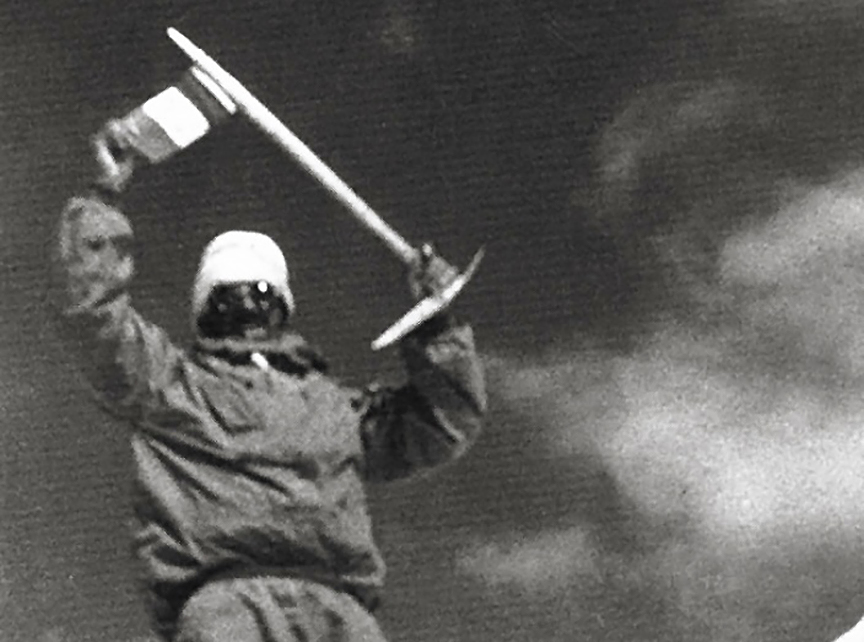
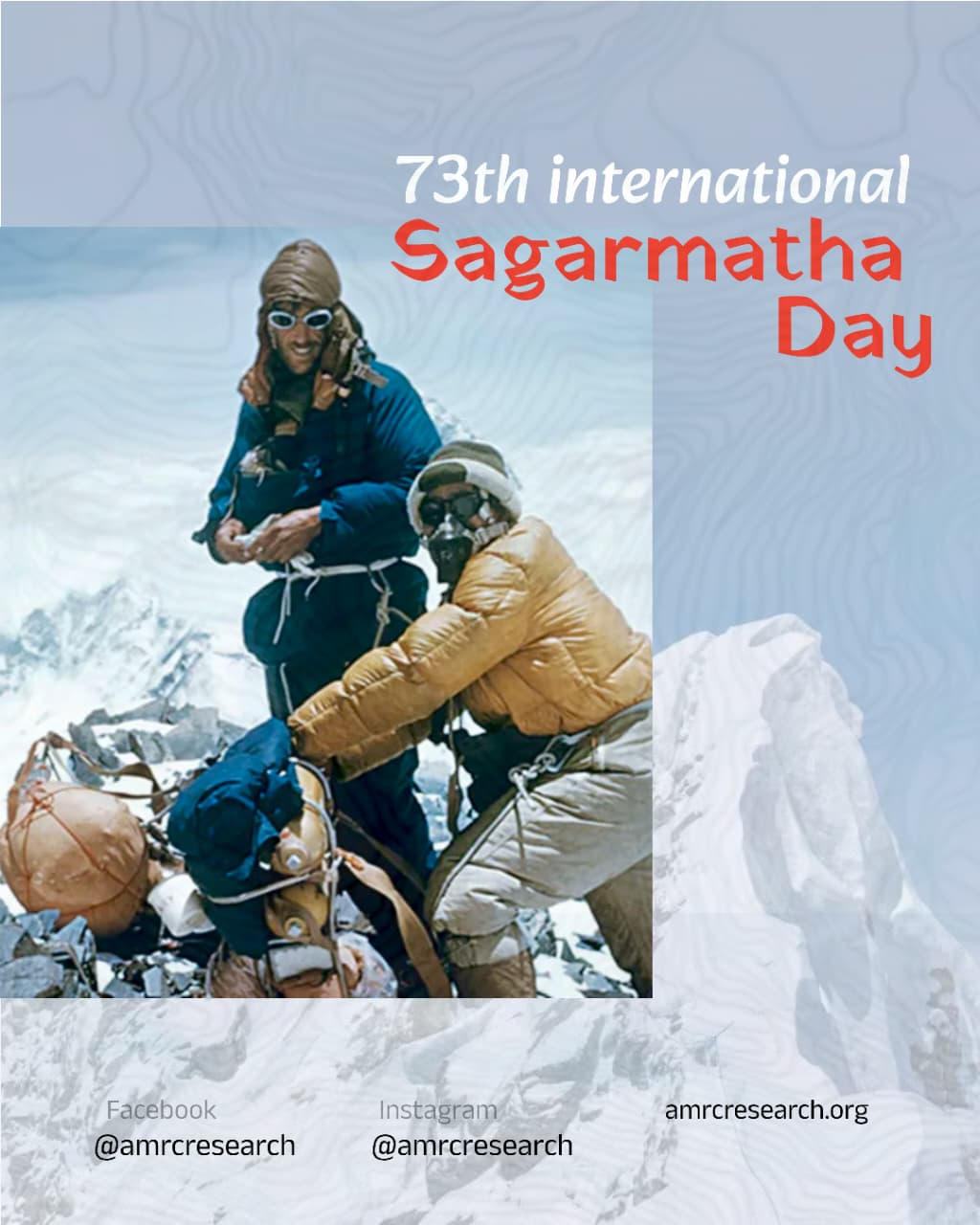
Happy 73rd International Everest Day! Today, we commemorate the historic moment on May 29, 1953, when Tenzing Norgay Sherpa and Sir Edmund Percival Hillary took the very first steps onto the summit of Mount Everest.
This day is a celebration of an unparalleled human milestone during the British Mount Everest reconnaissance expedition. It is a moment to honour the profound ecological significance of the Himalayas, reflect on the harsh realities of climate change, and express deep gratitude to the grassroots supporters who make these legendary journeys possible.
Over the decades, the magnetic pull of Everest has only grown stronger. Historically, over 10,000 courageous climbers have stood at the highest point on Earth. The data from the Department of Tourism ( DoT) Nepal, this year's spring season alone reinforces this global fascination: 415 climbers (105 women and 310 men) from 56 different countries across 52 teams received permits to ascend.
To every climber, and most importantly, to the High altitude support staff, Ice Fall doctor, climbing Guide, NNMGA/IFMGA Mountain guides, Sardar, liaison officers, and grassroots workers tirelessly operating behind the scenes. We, AMRC, extend our deepest respect and appreciation. Your sweat, resilience, and indigenous knowledge form the true backbone of Himalayan mountaineering.
Mount Everest (Sagarmatha) (Goddess of the Sky) in Nepal and Chomolungma (Holy Mother) in Tibet stand majestically at an elevation of 8,848.86 Masl. Situated in the Mahalangur Himal subrange on the border of Nepal and the Tibet Autonomous Region of China, the mountain is a living timeline of Earth's history.
Geologically, the uppermost sections of Everest are composed of multiple rock formations, including marine limestone, metamorphic schist, and shale. This means the highest peaks on our planet were once resting at the bottom of an ancient ocean, pushed into the sky by massive tectonic collisions!
First identified as the world's highest peak following the 1852 Great Trigonometrical Survey of India, where it was initially designated as Peak XV, the mountain was officially renamed in 1865 to honour Sir George Everest, the British Surveyor General of India.
Long before the historic 1953 triumph led by Colonel John Hunt, this formidable peak stood as a crucible for human endurance, witnessing decades of relentless and often tragic early campaigns, from the pioneering 1921 reconnaissance to the heartbreaking 1924 disappearance of George Mallory and Andrew Irvine.
This legacy of testing the absolute outer limits of human capability is equally defined by visionary trailblazers who shattered icy glass ceilings at the top of the world, such as Junko Tabei, who became the first woman to summit in 1975, and Pasang Lhamu Sherpa, who courageously became the first Nepali woman to reach the peak in 1993.
Their extraordinary bravery, alongside that of countless other pioneers who pushed beyond mortal boundaries, laid the very foundation for the modern triumphs we celebrate today. It is upon this monumental legacy that today’s titans of the Himalayas now stand, fundamentally redefining what is possible in the “Death Zone.”
In today's modern mountaineering arena, Nirmal “Nimsdai” Purja have completely shattered traditional paradigms, conquering all 14 of the world’s 8,000-meter peaks at lightning speed and proving Nepali mountaineers to be the absolute elite of global athleticism. Meanwhile, living legends such as Kami Rita Sherpa continue to defy human comprehension; with his mind-boggling 32nd summit of Everest in May 2026, he has demonstrated a lifetime of unparalleled endurance, mastery, and reverence for the mountain.
Together with modern record-breakers like Lhakpa Sherpa, the undisputed "Mountain Queen" with 11 summits, and Pa Dawa Sherpa with 31 summits, this vanguard has boldly reclaimed the narrative, transforming the global perception of Nepali climbers from invaluable support staff into the undisputed, world-leading pioneers of high-altitude mountaineering.
As per the Department of Tourism Nepal, the last data shows that over 16,719 successful climbs have been recorded across all seasons (including 13,869 in spring, 171 in summer, 2,344 in autumn, and 335 in brutal winter conditions). Out of the 332 lives tragically lost on the mountain, over 130 were Nepali Sherpas, guides, and porters. We must never forget that the triumphs celebrated globally are built upon their immense sacrifices.
While human endurance continues to conquer the altitude, the mountain itself is fighting a losing battle against global warming and climate change.
According to the United Nations, mountains are home to 15% of the global population and host half of the world's biodiversity hotspots. Furthermore, they act as the water towers of the world, providing freshwater to over half of humanity.
The Himalayas, where 8 of the 14 global "eight-thousanders" and 1,310 peaks over 6,000 meters reside, play a critical role in managing our planet's climate. However, rising global temperatures and over-exploitation are causing these ancient glaciers to melt at an alarming, unprecedented rate. Protecting Everest isn't just about preserving a climbing destination; it is about securing the climate balance and water sources for billions of people in Asia.
To truly honour the bravery of Norgay and Hillary, we must look beyond the summit. It is our collective responsibility to advocate for sustainable mountain climbing and actively work to reduce our #carbonfootprint.
We must build a robust, global #alliance of climbers, academics, policymakers, and local communities to bring positive, lasting change to mountain people and environments worldwide. Let us protect the roof of the world for generations to come.
#Sagarmathaday #InternationalSagarmathaDay #Sagarmatha #amrcresearch #NepalTourism #MoCTCA #Nepal #ClimateAction #GlobalWarming #Himalayas