The 76th Anniversary of Annapurna I: A Look Back at the Goddess of Harvest
Today is June 3, 2026, and in the Nepali calendar, it's the 20th of Jestha. It’s pretty amazing to think that 76 years ago, someone first set foot on the summit of an 8,000-meter peak. Back in 1950, French climbers Maurice Herzog and Louis Lachenal stood on the 8,091 Masl peak of Annapurna I. That was huge, especially since it happened three years before anyone reached the top of Sagarmatha, which you might know as Mount Everest.
The Historical Timeline and the "Blind Siege"
The history of the first ascent is a tale of human endurance and unexpected changes. In 1950, the French expedition, organised by the French Alpine Club, was the first in over a century to receive permission from the Nepalese government to climb Dhaulagiri I. The team arrived at Tukucha, at 3,000 meters in the Kali Gandaki Valley, in mid-April 1950. However, after exploring the Miristi Khola river and the eastern Dhaulagiri Glacier, they found the mountain too challenging before the summer monsoon arrived.
Consequently, Herzog and his team, which included climbers Lionel Terray, Gaston Rebuffat, Jean Couzy, Marcel Schatz, diplomat Francis de Noyelle, filmmaker Marcel Ichac, and expedition doctor Jacques Oudot, decided to cross the deep Kali Gandaki Gorge and shift their focus to the North Face of Annapurna I. Time was limited, so they adopted a siege-style strategy. Siege-style climbing (more formally known as expedition-style) is a mountaineering method where climbers treat a mountain like a military campaign, navigating through dangerous crevasses and sickle-shaped glaciers.
The Sherpa Contribution and the Tragic Descent
This expedition relied heavily on support from the local Sherpa team. The sirdar was Ang Tharkay Sherpa, along with Ajiba, Ang Dawa, Ang Tshering, Dawa Thondup, Ila, Phu Tharkey, and Sarki. They carried heavy loads up the treacherous ice walls. On June 2, at Camp 5 (7,400 meters), Herzog invited Ang Tharkay to join the final summit push, but the sirdar wisely declined as his feet were starting to freeze.
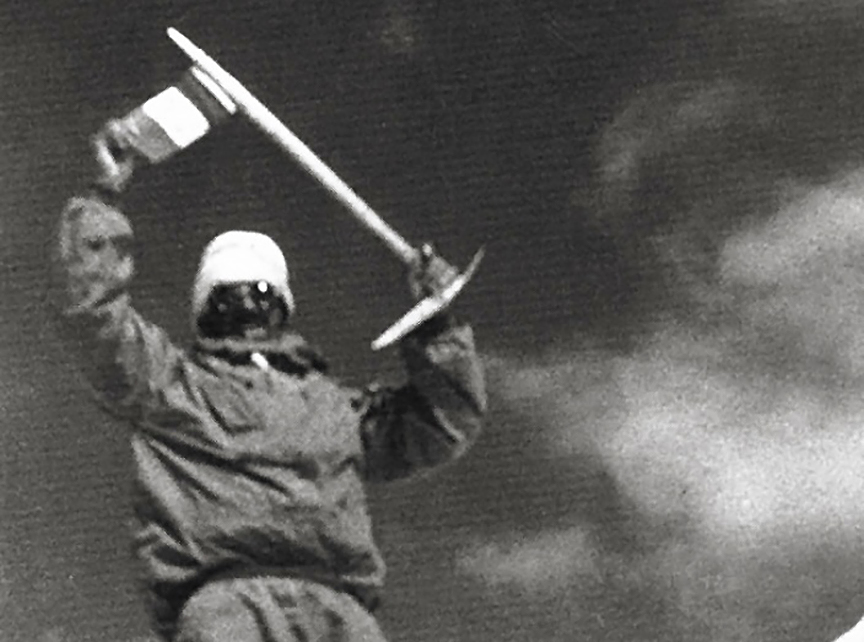
On June 3 at 2:00 PM, Herzog and Lachenal successfully reached the summit without using supplemental oxygen in minus 40-degree Celsius temperatures. However, the descent turned into a tragic struggle. Caught in a whiteout storm and suffering from severe frostbite after losing their gloves, the climbers had to be carried by the Sherpas across the moraines. At base camp, Dr Oudot performed painful amputations on Herzog’s fingers and all of his toes, and Lachenal’s toes, without any anaesthesia to stop the gangrene.
Mountain Diplomacy and Internal Controversies
The impact of this expedition created a strong form of mountain diplomacy that opened Nepal to the world. Herzog wrote a book called Annapurna, which has been translated into over 50 languages and sold millions of copies. The book showcased the resilience of the Sherpas and the beauty of the country to a global audience.
However, from a sociological perspective, academic studies later uncovered internal controversies. Lachenal’s posthumous diaries from 1996 and David Roberts' book True Summit revealed high tension and discord within the team. The contributions of Terray and Rebuffat in route-finding were overlooked in the official narrative. Still, it is heartening that Ang Tharkay Sherpa mentioned in his 1954 memoirs that the French members treated him with kindness and equality.
Geological Technicalities and Objective Hazards
To understand the technical aspects of Annapurna I, examine its unique geology. Surprisingly, the summit of this high mountain is not made of hard igneous granite. Instead, it consists of early Palaeozoic sedimentary rocks like limestone and dolomite. Millions of years ago, this area was the bottom of the prehistoric Tethys Ocean. When the Indian and Eurasian tectonic plates collided, the ocean floor was pushed upward. Therefore, standing on Annapurna means literally standing on an ancient seabed.
Technically, it is the most dangerous 8,000-meter peak due to extreme hazards. Climbers must navigate unstable seracs and steep ice walls on the North Face, which can trigger deadly avalanches when the afternoon sun warms the snow.
Statistically Interpreting the Empirical Data
Because of these severe challenges, interpret the data from the Himalayan Database up to the Spring 2025 update.
| Metric Category | Count | Interpretation |
|---|---|---|
| Total Expeditions | 271 | A highly exclusive mountain attempted by very few over 76 years. |
| Total Member Count | 2,059 | The total number of individuals who have attempted the climb. |
| Overall Success | 557 | The success rate is approximately 27.1 percent. |
| Male Member Success | 263 | Historically the dominant demographic of climbers. |
| Female Member Success | 70 | Shows a positive and growing inclusion of women in extreme altitude sports. |
| Nepali Guide Success | 226 | Local guides account for over 40% of all successful summits, acting as the undeniable backbone of commercial climbing. |
Local guides account for over 40% of all successes, proving they are the true backbone. However, the most significant statistic relates to the high mortality rate. The mountain is unforgiving, with 75 total deaths recorded. The data shows that 52 male members and 3 female members have died. Unfortunately, 20 Nepali climbing guides have also lost their lives. This results in a harsh safety ratio where approximately one person dies for every 7.4 successful summits. The loss of 20 local guides highlights that mountain workers bear a disproportionate burden of risk to make commercial mountaineering possible.